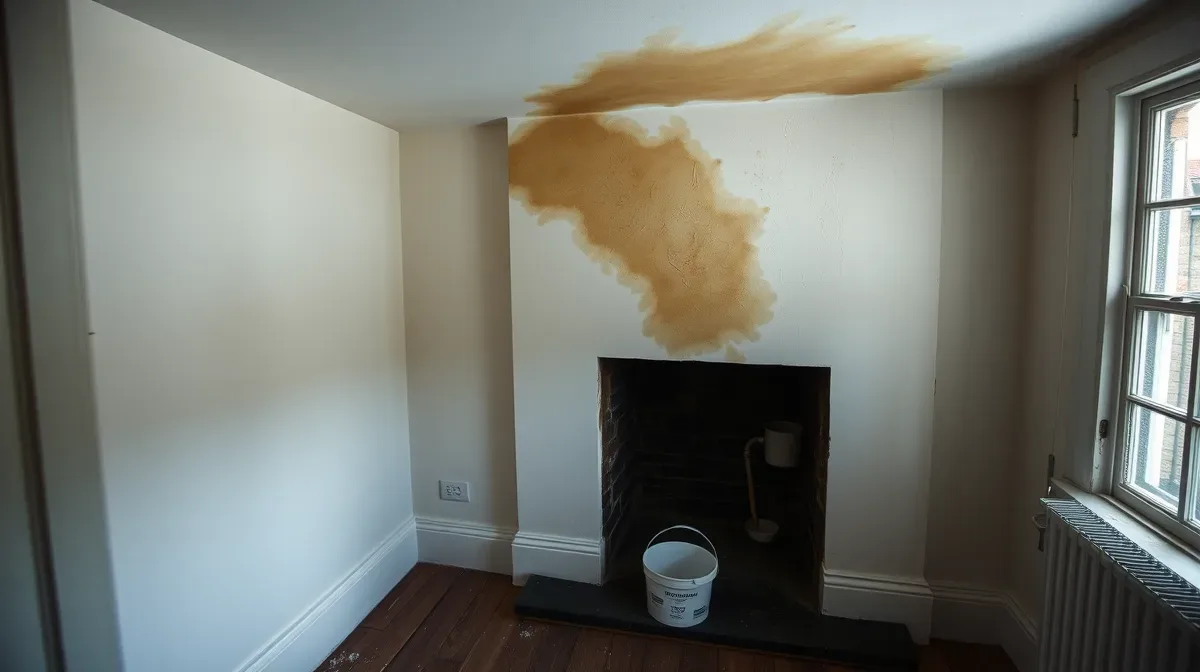
Roof Leak Repair in Reading
Roof repairs, re-roofing and flat roofs across Reading and the Thames valley. Free surveys, fixed written quotes, tidy workmanship.
Reading Roofing Company traces and repairs roof leaks across Reading. Finding the entry point is the whole job; the repair afterwards is usually straightforward and often cheaper than people fear. Water enters at a fault, runs along a rafter, a batten or a pipe, and shows up somewhere else entirely — three metres sideways and a floor down is completely normal.
That is why we look before we quote, and why a firm that offers to "seal the roof" without going into the loft is guessing with your money.
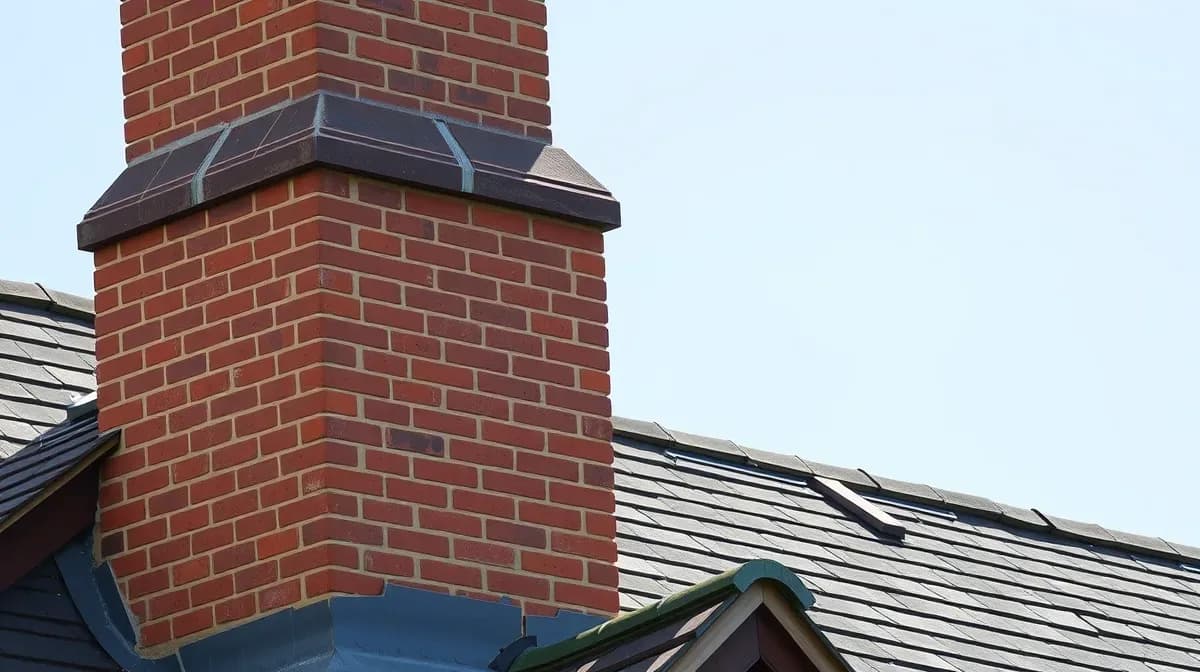
How we work out where it is getting in
The loft comes first, in daylight, with torches off. Pinholes of light, dark tracking on rafters and battens, and the shape of the staining all point uphill towards the entry. Wet timber that is dry six inches higher tells you the water arrived from above; wet everywhere and no track usually means condensation instead.
Then the roof itself: flashings, valleys, gutters, ridge and verge, and every penetration. Where the picture is still unclear we hose-test from the bottom of the slope upwards, one section at a time with someone watching inside, which is slow and dull and settles the question properly. On flat roofs we flood-test the outlet and check the upstands, because that is where they nearly always fail.
On terraces there is one extra step. Water crossing a party wall in the roof space is common, so where a leak sits near the boundary we ask to look in the neighbour's loft as well. It is a five-minute favour that has saved plenty of people from paying for work on a roof that was never the problem.
You get the photographs either way, marked up with what we found and where. If the fix is a two-hundred-pound flashing repair we will say so, and if it is a slope that has reached the end of its life we will say that too, with both figures on the page.
Where the water is actually coming in
| Entry point | How often we find it | Typical repair cost |
|---|---|---|
| Chimney flashing or back gutter | The most common single cause on terraces | £350 – £900 |
| Split or silted valley | Common on rear additions and back-to-back roofs | £600 – £1,500 |
| Parapet gutter outlet blocked or lining perished | Common on Victorian fronts | £450 – £1,600 |
| Slipped, cracked or missing slate | Very common, and the cheapest to put right | £160 – £450 |
| Flat roof upstand or kerb | The usual fault on extensions and dormers | £300 – £1,200 |
| Condensation, not a leak at all | Roughly one call in five over winter | £90 – £400 for ventilation |
2026 repair ranges once the source is confirmed. The inspection itself is free, and you get the photographs whether or not you use us for the repair.
Leak or condensation? They are not the same bill
Timing
A leak shows up during or just after rain. Condensation appears on cold, still nights and gets worse through winter regardless of the weather outside.
Pattern
Leaks track and stain in a line or a ring. Condensation is even damp across cold surfaces — nail heads, felt, the underside of a flat roof deck.
The usual cause
Blocked eaves ventilation after a loft top-up, a bathroom fan ducted into the loft instead of outside, or a cold flat roof with no vapour control layer.
The fix
Eaves vents, a ridge vent or ducting the fan through the roof — a few hundred pounds. Considerably less than the re-roof some people are sold for it.
Frequently asked questions
Ready for a free, no-obligation quote?
Call 0118 230 9278